Cited but Unclaimed: Auditing the Dashboards That Shape UK Decisions Without an Owner
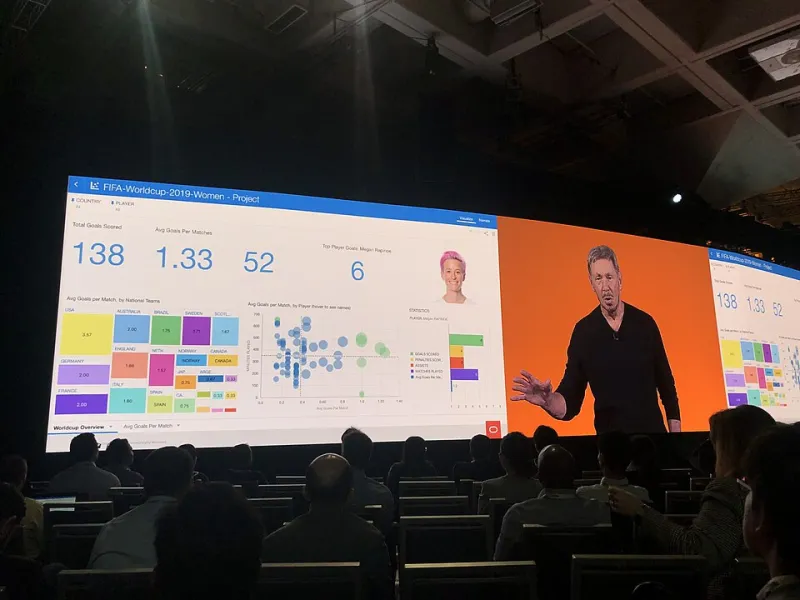
Photo: GeneralAB13, CC BY-SA 4.0, via Wikimedia Commons
There is a particular kind of report that survives in UK organisations without ever being defended. It is referenced in a Tuesday operations meeting. A screenshot of it appears in a board pack under a chart with no footnote. Somebody says "the numbers on the dashboard look a bit off" and the conversation moves on. Nobody can say who built it, who maintains the definitions, or when it was last opened by a human being rather than by a schedule.
These are orphaned dashboards, and they are expensive in a way that rarely appears on a cost line. They consume a licence seat, a refresh window, a slice of warehouse compute and, most importantly, a measure of institutional confidence that has not been earned.
Two kinds of use, only one of which is evidence
Before auditing anything, separate consumption from citation. Consumption is what the access log records. Citation is what the meeting minutes, the board pack and the monthly commentary record. They diverge constantly, and the gap between them is the finding.
Access logs are also weaker evidence than they appear. A scheduled refresh of an extract may register as a view. A single service account that powers an embedded chart can register as thousands of sessions. A director who opens the dashboard every Monday at 08:55 and looks at one tile for ninety seconds is counted identically to a team that works from it all day. Treat raw view counts as a signal to be triangulated, never as a verdict.
Building the register
The audit starts with an inventory that most organisations cannot produce on demand: every published report, its workspace, its underlying dataset, its refresh schedule, its last modification date and its owner as recorded in the tool. Then layer on three further columns — the person who actually answers questions about it, the decisions it is said to inform, and the last date it was cited in a formal document.
The awkward rows are the ones where the recorded owner has left the organisation. In a mid-sized UK estate it is common to find that a fifth of published content is owned by an account that no longer belongs to a current employee, and a further slice is owned by a generic team mailbox that nobody monitors.
Scoring rather than arguing
Disagreements about which reports matter are usually resolved by seniority rather than evidence. A simple scoring model short-circuits that. Score each report on four dimensions: recent genuine access by distinct named users, citation frequency in governance documents over the last two quarters, presence of a live and contactable owner, and whether the report's definitions are documented in a metric layer rather than embedded in a query.
Reports that score well on access and citation but badly on ownership are the dangerous middle. They are trusted and ungoverned, which is a worse position than being ignored. Reports that score badly on access and citation but well on ownership are usually somebody's pet project and can be retired with a conversation. Reports that score badly on all four are straightforward deletions.
Three verdicts, not two
The temptation is to sort reports into keep and delete. Three categories work better.
Certify. The report is used, cited and has a named owner who understands the definitions. Certification should be a formal act: a published owner, a documented metric lineage, a stated refresh commitment and a review date. Certified reports earn the right to appear in board packs.
Rebuild. The report is cited but the underlying logic is opaque, the owner has gone, or the figures can no longer be reproduced from source. These are the expensive ones — but leaving them in place is more expensive, because they continue to inform decisions while nobody can defend them.
Retire. No meaningful access, no citation, no owner. Retirement should include an archive step, because UK statutory and audit requirements mean some content must be retained even when it is no longer live. Deleting a dashboard is a technical action; retiring one is a records decision.
The board pack problem
The highest-risk orphans are the ones that have crossed into formal reporting. Once a chart has appeared in a board pack, it acquires authority that is entirely independent of its quality, and it tends to be reproduced quarter after quarter because reproducing it is easier than questioning it.
A pragmatic control is to require that anything appearing in a board pack traces to a certified report with a named owner and a documented definition. That single rule tends to do more for data quality in UK organisations than any amount of tooling investment, because it gives the person preparing the pack a defensible reason to stop copying the familiar chart.
A thirty-day sequence
Weeks one and two: extract the inventory and the access logs, and reconcile against the citation trail from the last two quarters of governance papers. Week three: interview the ten people who appear most often as consumers and ask them which numbers they would defend in front of an auditor. Week four: publish the register with verdicts, name owners in writing, and set a review cadence tied to the existing quarterly cycle rather than inventing a new forum.
The goal is not a smaller estate for its own sake. It is that every number a UK organisation quotes in a decision has somebody's name attached to it, and that the somebody is still employed there.