The Last Switch: Auditing What Survives a UK System Retirement

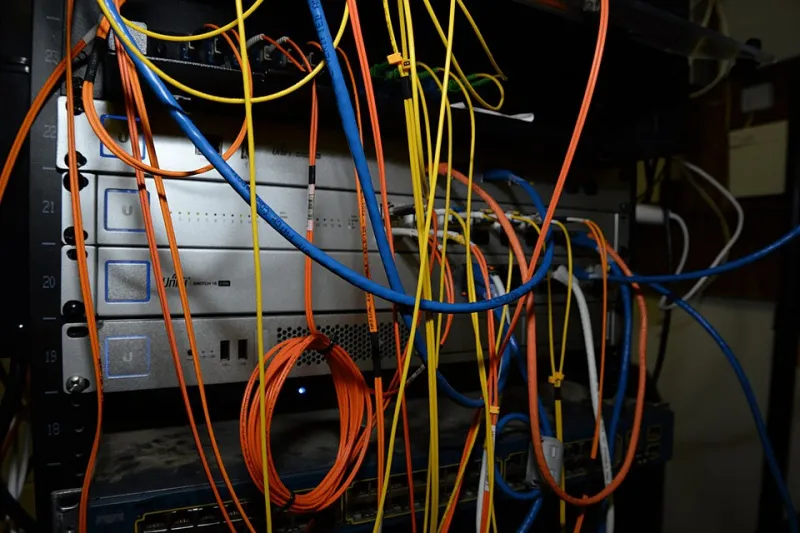
Photo: Petty Officer 3rd Class Christopher Yaw, Public domain, via Wikimedia Commons
Retirement is a project, switch-off is a date
UK operations teams are, on the whole, competent at implementation. Decommissioning receives a fraction of the same rigour. The go-live plan has a steering group, a cutover weekend and a runbook; the retirement plan has a line in the project closure document and an assumption that the vendor will handle the rest.
That asymmetry has a consequence. Systems are rarely switched off completely. They are switched off in the sense that no one logs in any more, while a scheduled file transfer continues to deposit records into a shared folder, a read-only licence renews annually, an archive environment sits unpatched on the estate, and three people still export a report from it because the replacement does not quite do what the old one did.
The result is a class of application that exists in a half-life: formally retired, operationally present, and owned by nobody.
Four families of residue
Dependencies that outlive an application fall into recognisable groups, and each needs a different kind of verification.
Orphaned integrations. The catalogue is rarely complete. Beyond the documented interfaces sit the informal ones: a scheduled job on a virtual machine, a spreadsheet macro pulling a flat file over FTP, a connector built by a contractor in a previous year. These fail silently, sometimes for months, quietly corrupting a downstream data set.
Retained data. Records that must be kept and records that should have been deleted are usually stored together, in the same archive, under the same vague justification. Retention obligations — tax and accounting records typically stretching six years, employment and contract records on their own clocks, and data protection law requiring that personal data not be kept longer than necessary — rarely align with the retirement date. Deletion must be a decision, not a default.
Contract and licence tails. Notice periods, auto-renewal clauses, minimum terms, data return and destruction obligations and exit fees are all negotiated at signature and forgotten at exit. A licence that renews quietly for two further years is a common and entirely avoidable cost.
Presentation layer and manual workarounds. Dashboards, scheduled reports, spreadsheet extracts and the habits built around them. A retired system whose reporting layer remains live is still, functionally, in service.
Before the switch: the pre-retirement audit
Treat the audit as a short, evidence-gathering exercise with a named owner and a fixed end date. Four workstreams cover most of the ground.
Dependency mapping. Start from the system's own logs and network traffic rather than the integration catalogue. What connects to it, from where, and on what schedule? Anything reaching the application from an undocumented source is a finding.
Data triage. For each data domain, decide one of four outcomes: migrate, retain in an archive with a defined access route and retention period, return to a third party, or delete. Record the reasoning and the approving name. This is the step most often skipped and the one that creates the most difficulty two years later.
Contract review. Confirm notice dates, termination mechanics, obligations on data destruction and the evidence the vendor will provide. Diarise the notice date rather than trusting a calendar entry created by someone who has since left.
Workaround census. Ask the people who use the system what they still do with it. The answer will surface the report, the reconciliation and the exception process that the replacement programme did not account for.
After the switch: the post-switch-off checklist
Switch-off is only complete when the following are closed and evidenced: integrations disabled and confirmed silent for a full cycle; service accounts and credentials revoked; DNS entries and certificates removed; data archived in a readable format with documented access; statutory and litigation-hold requirements confirmed; the record of processing updated; disaster recovery and business continuity documentation amended; dashboards retired and their former users told; the system register and architecture diagram updated; the contract formally terminated with written confirmation of destruction where required.
Two items deserve particular attention. The first is retention evidence: an organisation should be able to show, on request, what was kept, why, for how long and under whose authority. The second is the residual access route. Regulators, auditors, HMRC enquiries and litigation can all arrive after the switch-off date, and a system that cannot be read is a system that cannot answer them.
The quiet cost of a half-retired system
Unpatched archive environments are an exposure with no operational benefit. Read-only seats renew on a per-user basis long after the users have gone. Vendor support contracts continue to be invoiced. And the invisible cost is organisational: a system believed to be retired is excluded from security patching schedules, from asset registers and from the review that would catch the problem.
There is also an audit dimension. An estate diagram that shows six applications when eight are still processing data is not a documentation gap; it is a misstatement of the operating environment, and it undermines every risk assessment built on top of it.
Ownership is the missing control
The single most effective intervention is unglamorous: name an owner for decommissioning, keep a register of systems in retirement with a status and a date, and require change board sign-off before the switch is declared complete. Retirements that are tracked close. Retirements that are announced do not.
A system should leave the estate the way it entered it — with a plan, a named owner and evidence that the work was done.